Water-tube steam boiler configurations
DBW and SDW are two water-tube steam boiler lines developed by ENERGO.DESIGN. The boiler type is not selected by capacity alone. The final configuration depends on fuel properties, moisture, ash content, furnace volume, steam parameters, installation constraints and the agreed scope of supply.
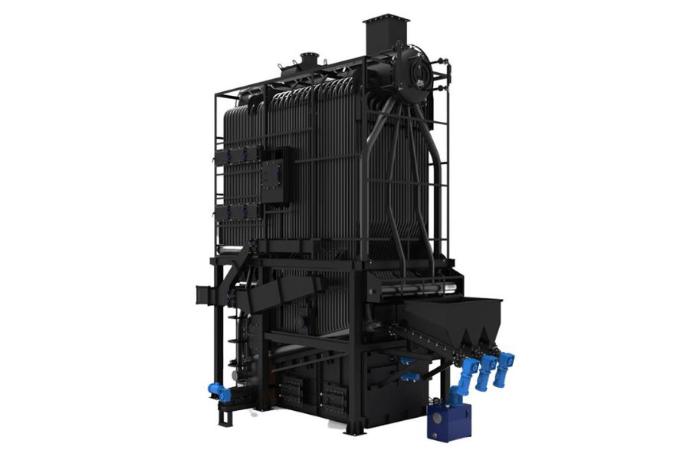
DBW — double-drum water-tube boiler
A double-drum configuration for lower and medium steam parameters, where a reliable water-tube design with natural circulation and efficient delivery-block arrangement are important.
Typical application range:
- steam capacity — from 1 to 12 t/h;
- operating pressure — up to 24 bar;
- saturated steam or moderate superheat up to 250 °C.
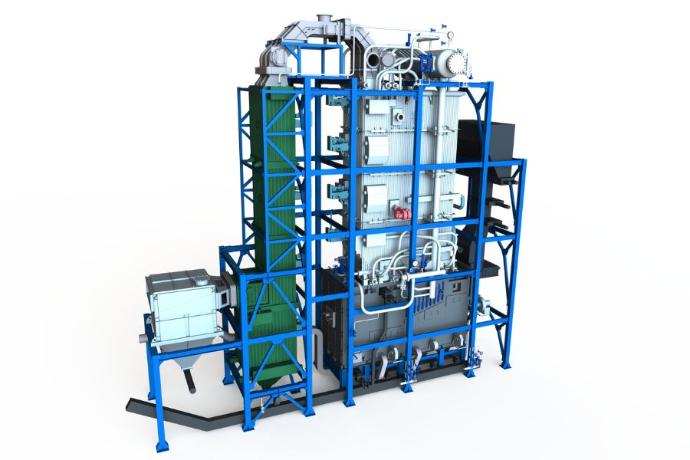
SDW — single-drum water-tube boiler
A single-drum configuration for duties requiring higher steam capacity, higher steam parameters or operation with a steam turbine.
Typical application range:
- steam capacity — from 7 t/h;
- operating pressure — from 24 bar;
- saturated or superheated steam; current superheated-steam implementation — 320 °C.
Main systems of the boiler unit
The boiler plant scope is defined by the site requirements, fuel characteristics, steam parameters and the agreed scope of supply. This section highlights the key systems that ENERGO.DESIGN can engineer, manufacture or integrate for a specific project task.
Fuel feeding and moving grate
The system feeds fuel from the day bin into the furnace and forms a controlled combustion bed on the mechanized grate. Fuel dosing is handled by a screw or ram feeder, selected according to fuel particle size, moisture, flowability and consistency.
The moving grate agitates and advances the fuel bed through drying, ignition, active combustion and burnout zones. Air supply can be controlled by zones, helping stabilize combustion, adapt the operating mode to the fuel and reduce the risk of incomplete burnout.
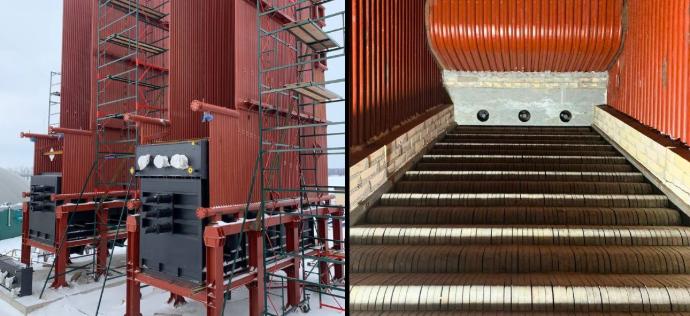
Service platforms and maintenance access
Stairs, platforms and service areas are part of the boiler unit design. They provide access to inspection doors, valves, drives, cleaning zones, upper boiler sections and inspection points. This affects safety, operation and practical maintenance.
If platforms and service structures are not included in our scope of supply, ENERGO.DESIGN engineers support equipment integration to preserve access for inspection, cleaning and maintenance.
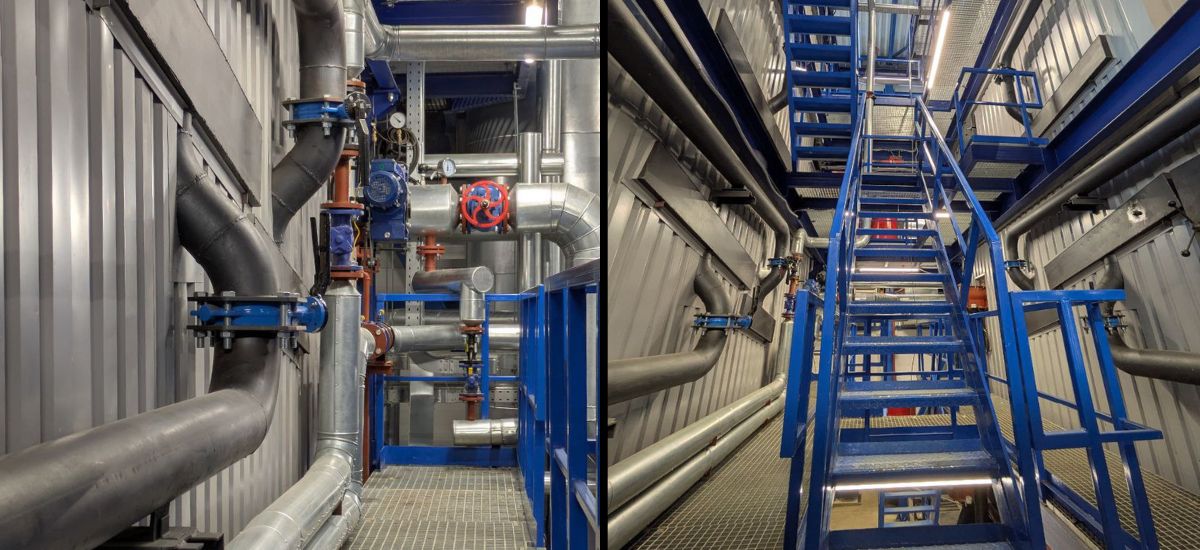
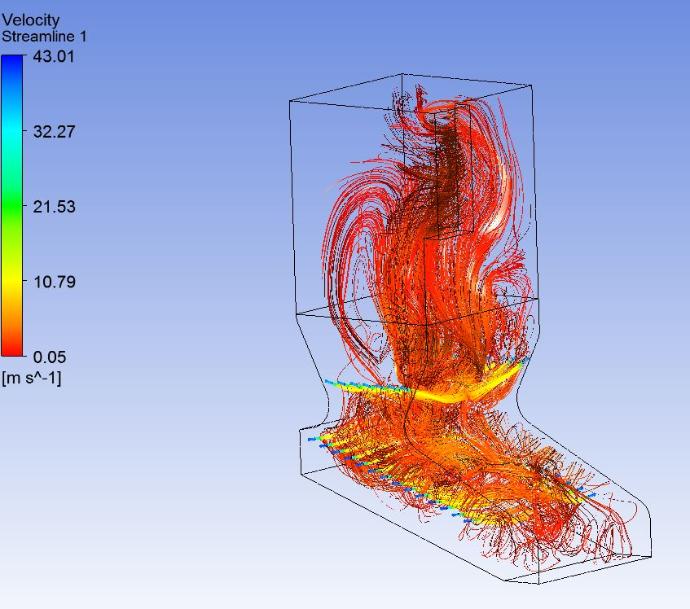
Biomass boiler: from fuel to boiler configuration
At the technical concept stage, we assess the fuel as one of the key factors that define the boiler design. What matters is not only the fuel type, but its real characteristics: calorific value, moisture, ash content, particle size, flowability and consistency.
What it defines: furnace volume and geometry, grate area, drying, combustion and burnout zones, zoned air supply, the need for combustion-air preheating and the gas path design.
Why it matters: to ensure stable combustion, complete fuel burnout and reduce the risk of ash sintering. In our calculations, we use not only theoretical methods, but also data accumulated from completed projects.
Suitable fuel profile:
- calorific value: 1,500–5,500 kcal/kg;
- moisture: up to 55%;
- fuel particle size: suitable for mechanical feeding and stable grate combustion;
- ash content and ash melting temperature: assessed separately for each fuel.
Practical experience and potential fuels: projects may consider sunflower husk, oat husk, wood chips, fuel pellets, prepared peat, agricultural residues and biomass mixtures. RDF, fuel waste and other non-standard fuels are assessed separately after extended fuel analysis, gas-cleaning requirements and project conditions are reviewed.
From design to control
Selecting the furnace, grate and gas path is only part of the task. For the boiler to operate reliably on real fuel, the system must continuously control fuel feeding, air supply, furnace draft, drum level, steam pressure and steam temperature.
From idea to boiler lifecycle
Understand the task
We define the plant’s steam demand, available fuel, consumption profile, site limitations and project goals.
Develop the technical concept
We define the engineering basis of the solution, the boiler unit scope, steam parameters, furnace, grate, gas path, automation and supply boundaries.
Implement and commission
We design, manufacture and supply the equipment, support integration, commissioning, operating mode verification and personnel training.
Support during operation
After start-up, we stay involved: supporting service, adjustments, component replacement, unit modernization and adaptation of the boiler to new operating conditions.
A boiler is a long-term engineering investment
A boiler unit operates within the plant’s technological process. That is why it must not only be manufactured to a high standard, but also properly integrated into the site: the building, piping, fuel feeding system, gas path, automation and production operating mode.
Our cooperation does not end when the completion documents are signed. Start-up is only the beginning of the boiler lifecycle. We support the customer during the initial stages of operation, helping with adjustments, service, component replacement, unit modernization and adaptation of the equipment to actual operating conditions.
The design service life of boiler equipment is 20 years, but in practice such units often operate longer. During this time, fuel, steam consumption profiles, automation requirements, component availability and the production configuration itself may change.
Long-term manufacturer support helps maintain safe, stable and efficient operation throughout the boiler lifecycle.
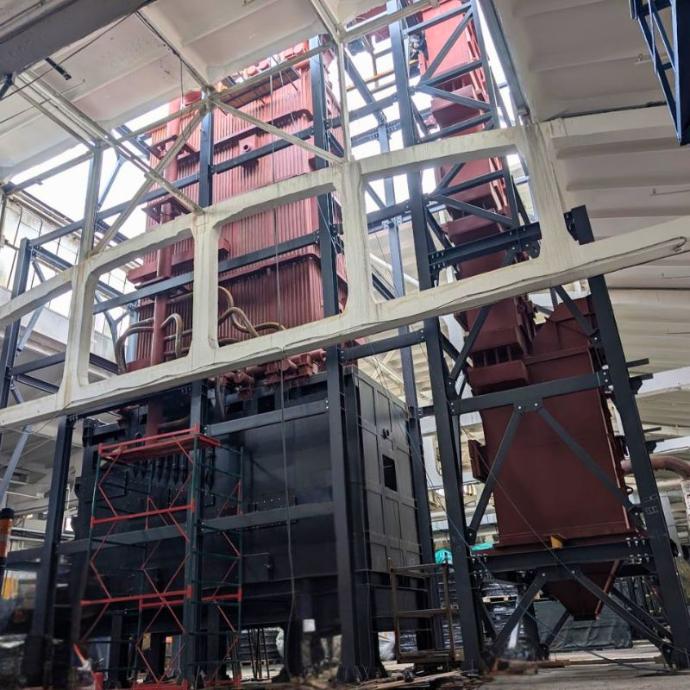
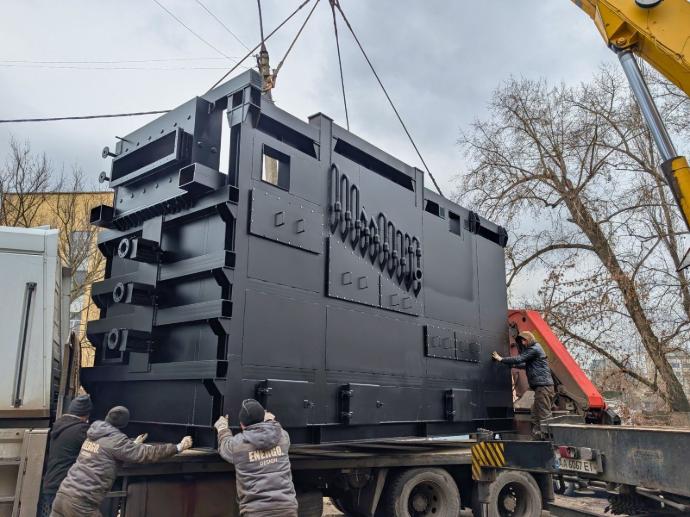
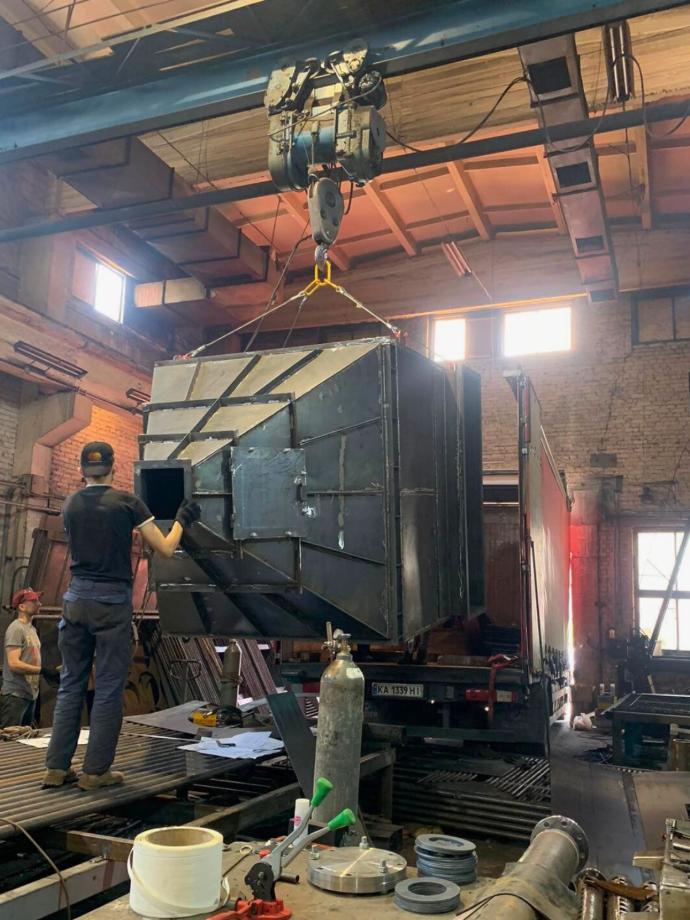
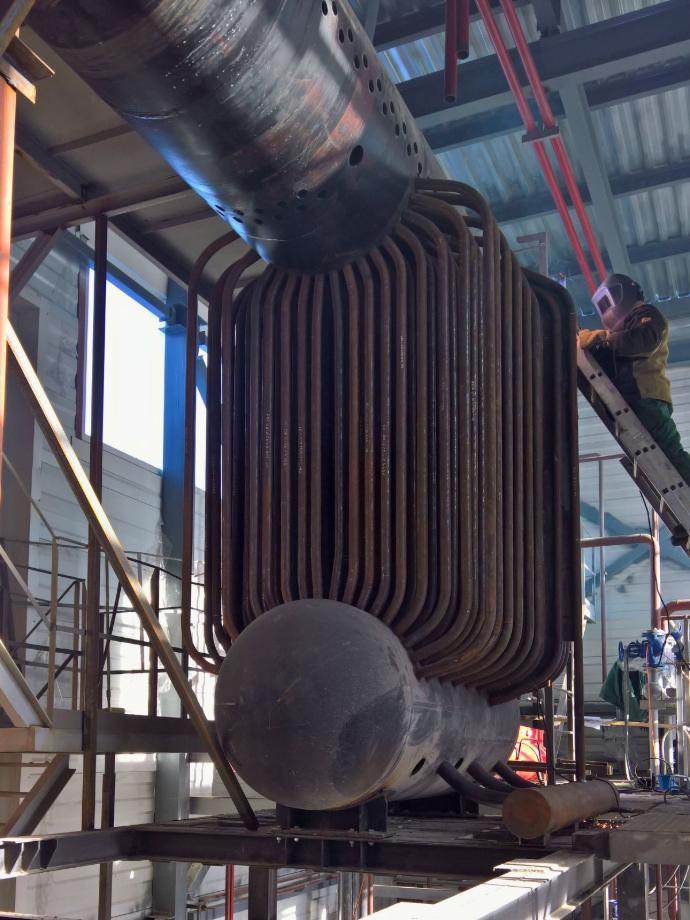
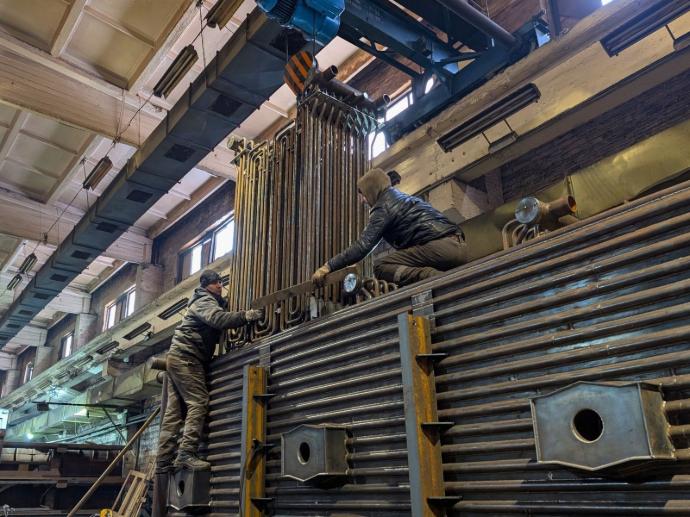
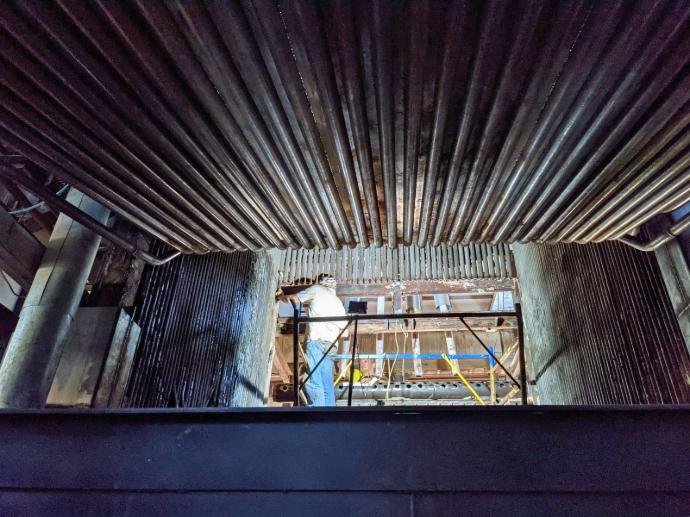
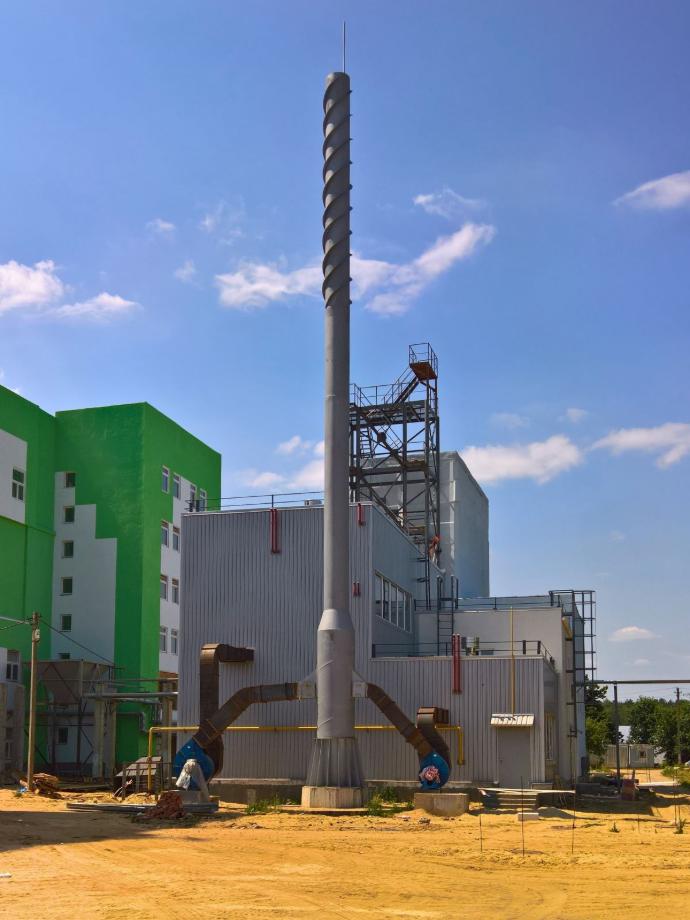
Gallery of completed projects
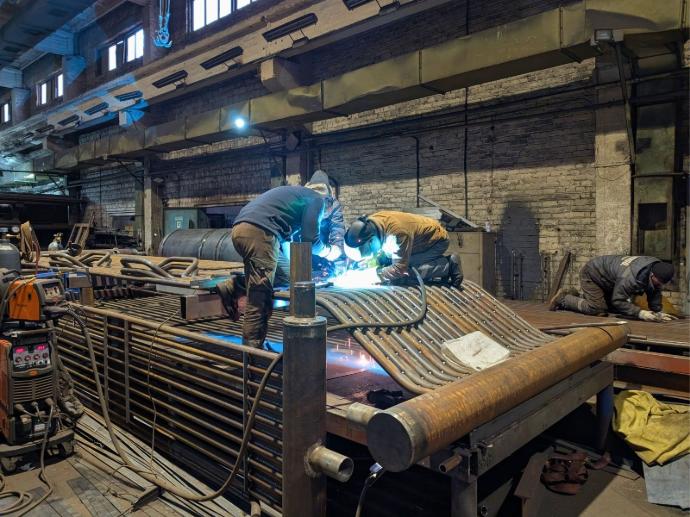
Photos from the fabrication, installation, and commissioning of steam boilers

Discuss a boiler unit for your fuel
Briefly describe your task: what fuel you plan to use, what steam parameters are required, and what type of production the project is intended for. If exact data is not available yet, we will clarify it at the first stage.
What is useful to include if the data is available:
- fuel type and moisture content;
- required steam capacity;
- steam pressure and temperature;
- production operating mode;
- country or city of the site;
- available technical specification, layout or diagram.